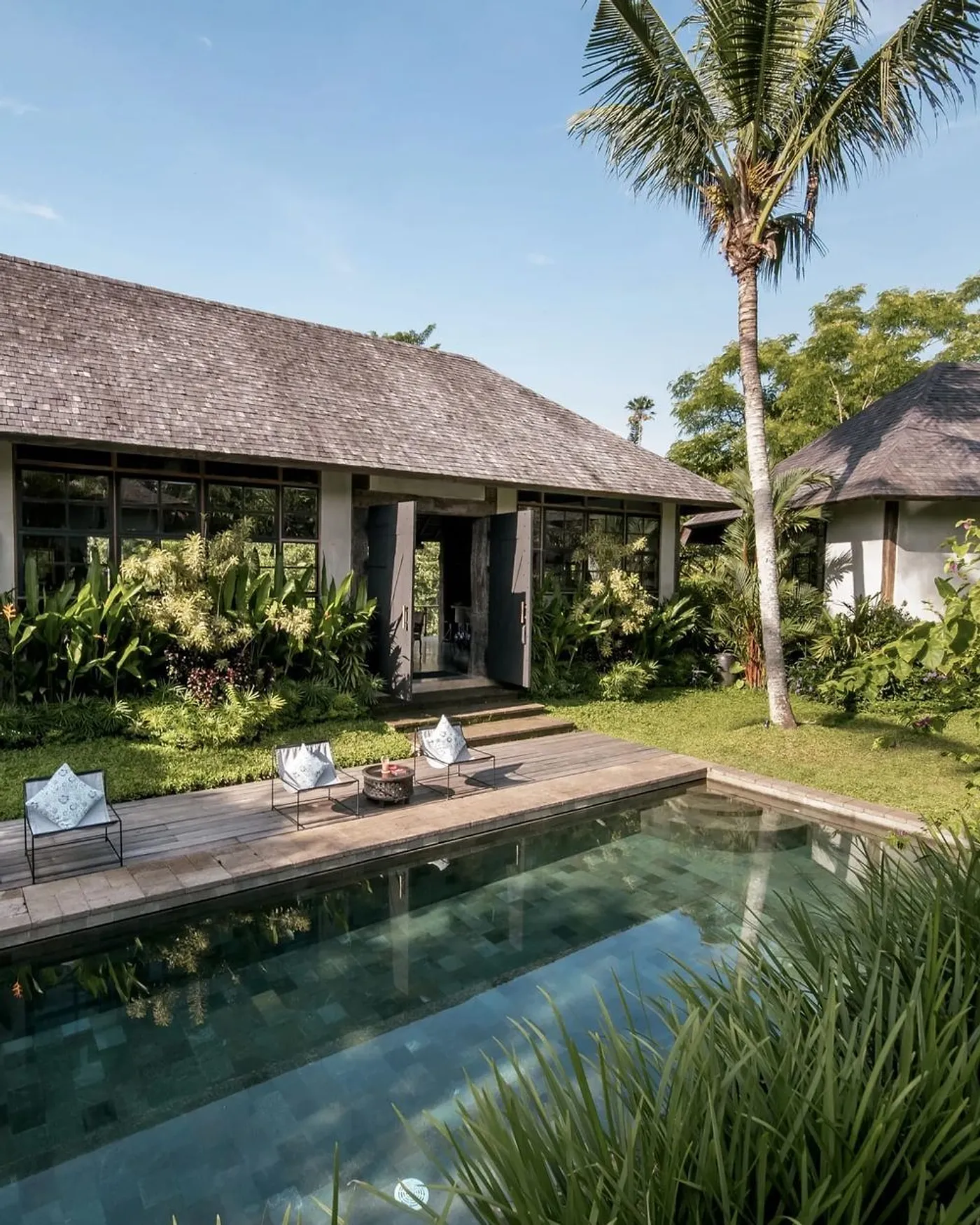
The setting
Ubud lies in Kecamatan Ubud, Gianyar, a district of seven desa and one kelurahan. The name is thought to come from the Balinese word ubad, medicine, after the medicinal plants once gathered here, and in the late 19th century the town became the seat of lords who answered to the king of Gianyar. It is now promoted as Bali’s centre of arts and culture.
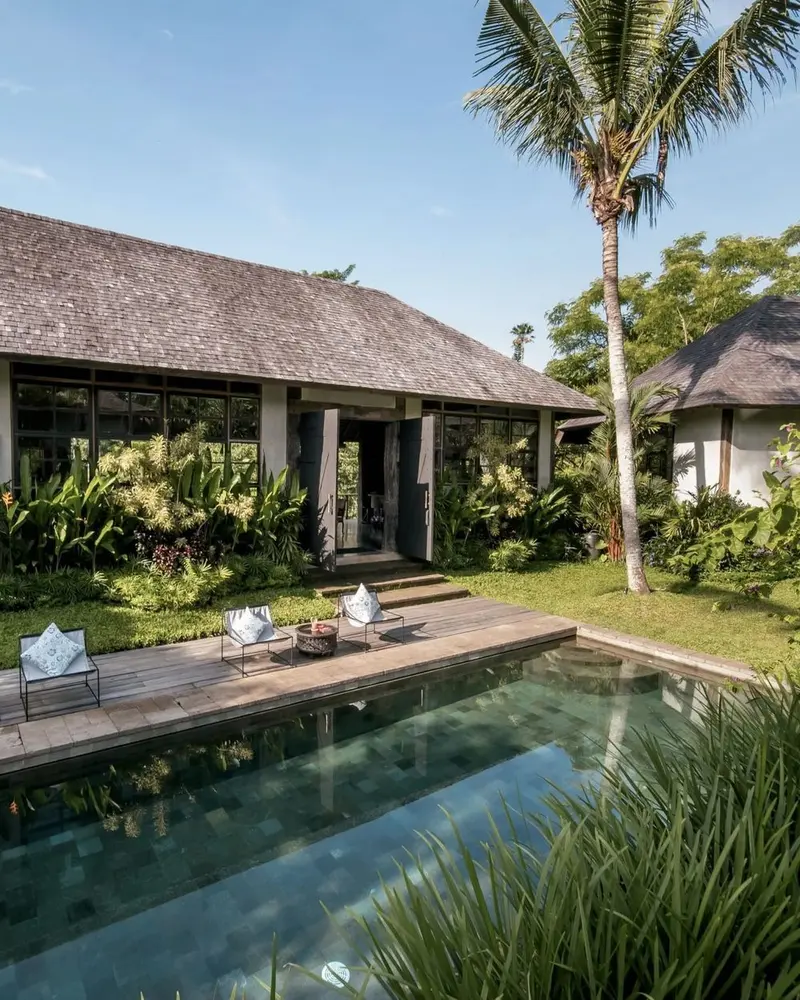
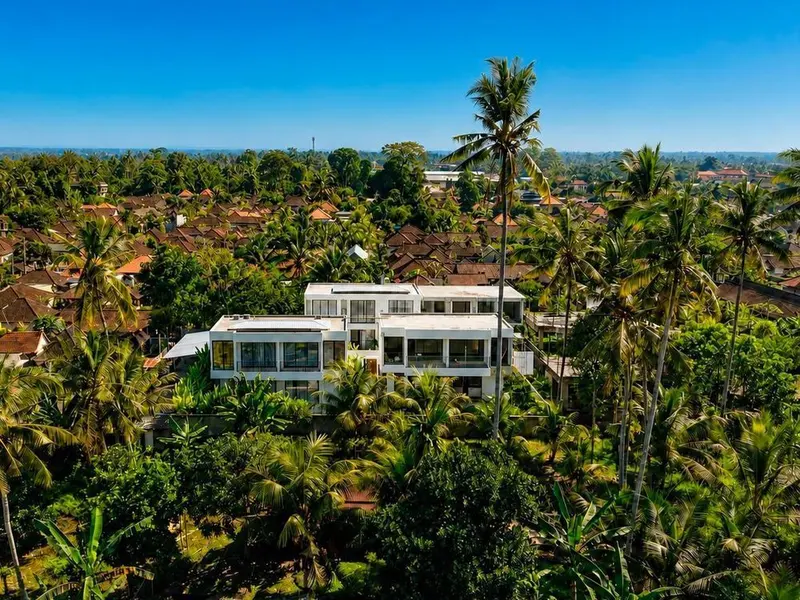
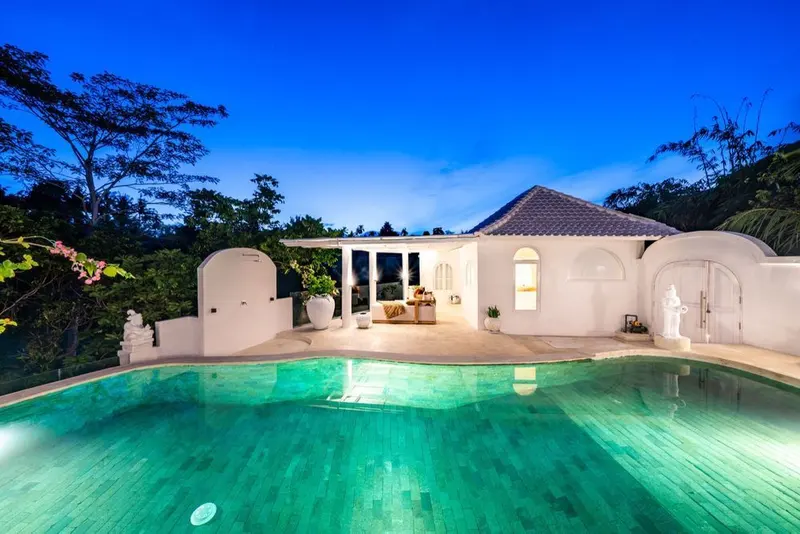
The top of the market sits outside the town centre. It is on the ridges and gorge edges above the Ayung, at Sayan and Kedewatan, and above the Petanu to the east. Four Seasons Sayan, Mandapa, Amandari and Viceroy are on these edges, with Capella further north in Keliki. Between them are private freehold estates of roughly 2,000 to 7,800 square metres, some built as early as 2000. Most of the stock in the wider area, by contrast, is smaller pool villas of two or three bedrooms on modest plots, below the US$500,000 line.
Several places sold as Ubud are administered elsewhere. Pejeng is in Kecamatan Tampaksiring, Tegallalang is its own kecamatan, and Penestanan is a banjar of Desa Sayan. Which office issues a permit depends on the exact parcel.
Where the best homes are
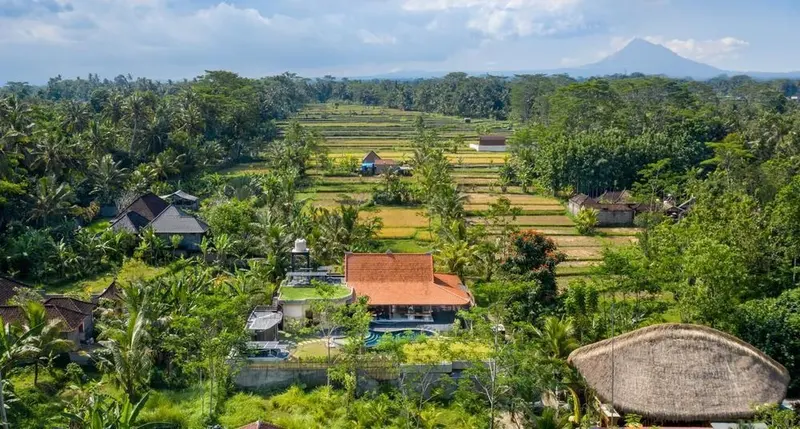
Sayan runs along a ridge beside the Ayung, about five kilometres west of the town, and has the lowest population density in the district. Its gorge side shares a planning block with Kedewatan, home to Amandari and Mandapa. One agent guide calls Sayan the riverfront tier of the market, with four and five bedroom homes over the valley or jungle. The block holds only about 136 hectares of tourism zone, against 98 hectares of protected paddy, so large tourism-zoned parcels are scarce.
Penestanan has been an artists’ village since the 1930s, when Walter Spies lived there, and in 1960 Arie Smit began the Young Artists movement from his studio in the village. Its lanes are narrow and plots small. The stock is mostly one to three bedroom villas, and it reads as a cultural address beside Sayan rather than an estate market.
Mas, south of the centre on the road from Sukawati, is a carving village that takes in Nyuh Kuning and Pengosekan, where The Yoga Barn runs more than 100 classes a week. The southern planning block that includes Mas is mostly farmland, with about 597 hectares of LP2B and only 166 hectares of tourism zone, so an estate here depends on its parcel-level zone. Nearby Lodtunduh has freehold estates of about 2,000 square metres.
Pejeng, east of Ubud on the Petanu side, is believed to have been a centre of the ancient Balinese kingdom from 883 to 1343, and is home to the Bulan Pejeng bronze drum. One freehold river estate there, five bedrooms on 2,485 square metres, lists its zoning as rural residential and its permit as a 2011 IMB Pondok Wisata.
Tegallalang, to the north, is largely agricultural. Only about 1% of its planning area, 68.73 hectares, is tourism zone. Large parcels list far below Sayan ridge prices per are, but permission for tourism use is the scarce item.
Title and zoning
Hak Milik, Indonesian freehold, is held only by Indonesian citizens, never by a foreign individual or a PT PMA. A foreigner may hold Hak Pakai over a landed house, and Kepmen ATR/BPN 1241/SK-HK.02/IX/2022 sets the Bali floor at Rp 5 billion, one plot per person or family, up to 2,000 square metres. Most Ubud estates are larger, so they are held through a PT PMA under HGB or Hak Pakai, or leased. Since 2 October 2025, under Permen Investasi/BKPM 5/2025, the minimum paid-up capital for a PT PMA has been Rp 2.5 billion. Leases are private contracts, not registered at BPN.
Zoning comes from Perda Kabupaten Gianyar 2/2023 and, beneath it, the Ubud RDTR, Perbup Gianyar 7/2023, promulgated on 28 February 2023. Of the district’s 4,390 hectares, about 40% is agriculture, about 25% housing and about 24% tourism zone. An LP2B overlay of 903.90 hectares forbids converting farmland to built land. In tourism zones, site coverage is capped at 60% with height at 15 metres. Buildings must stand at least 25 metres from the wall of a Kahyangan Tiga temple if single storey, or 50 metres if taller.
Gorge sites carry their own rule. Any slope of 45% or more and at least 15 metres deep is treated as sempadan jurang, allowing only low-intensity use, a safety study and, preferably, piled foundations, with no felling of the trees that hold the bank. On a ridge estate the buildable footprint can be far smaller than the land.
Enforcement is real. PARQ Ubud on Jalan Sriwedari, reported as Tegallalang, was closed in January 2025 for lacking PBG and SLF approvals, and its director was named a suspect over building on protected paddy. In August 2026 the province ordered all tourist accommodation to be listed and its permits checked.
Living here
The town has been congested since August 2026. From 8 September 2026, Jalan Raya Ubud became one-way eastbound, and two of three turns at the Sayan and Sindu junction have been closed since 14 August, with no published detour. Metered taxis and ride-hailing cannot pick up within Ubud. Ridge estates avoid the centre but depend on single ridge roads.
BIMC Ubud on Jalan Raya Sanggingan keeps an emergency department open around the clock and refers specialist cases within its network. Green School, in Sibang Kaja across the Badung border, teaches Pre-K to Grade 12, and The British School of Bali in Tegallalang opens Year 7 in August 2026. Mozaic, Room4Dessert and Locavore NXT are close at hand.
Water and power deserve attention. A 2021 study put Gianyar’s clean-water shortfall at 298 litres per second in 2020, and an agent guide says shallow wells often run low by September. Floodwater reached waist height in Ubud on 10 September 2025.
Asking prices
These are asking prices. One international villa index put Ubud’s top asking band at US$1.5 million to US$2 million in May 2026, describing a market built on land and privacy. Rumavi’s band for four and five bedroom homes in Sayan and on the riverfront ran from US$800,000 to above US$2 million in the same month. Estates opened in October 2026 asked US$1.95 million in Pejeng, US$1.85 million in Lodtunduh and about US$4.68 million for a 7,800 square metre riverside property. The twenty highest Rumah123 listings, viewed on 29 October 2026, ran from IDR 75 billion up to IDR 600 billion, mostly resorts and hotels.
For land, Rumavi in May 2026 gave the Sayan ridge at IDR 10 million to 18 million per square metre, Penestanan at IDR 5 million to 9 million, and Tegallalang and outer areas at IDR 3 million to 6 million. Large pink-zone parcels listed in October 2026 asked IDR 400 million to 750 million per are, with the upper figure in Kedewatan. Agents also convert rupiah at different rates, implying anywhere from about 16,992 to 18,175 to the dollar.
Before you buy
Confirm the parcel’s block in the RDTR, including the LP2B, flood, landslide and river-setback maps, and treat a field view as land that will likely stay unbuilt. Permits issued before the RDTR remain valid only for what they cover, with no new building, change of function or added height or coverage allowed, so plans to extend an older estate need a fresh check. Several estates carry IMB Pondok Wisata permits, a homestay category held by Indonesian citizens, and an overseas owner who intends to let needs a separate licence. Budget for water storage, a borehole and a generator.
We can arrange private viewings on the Sayan and Kedewatan ridge, including estates that are not publicly listed.